Correction, 29 October 2026. The first version told a story about wingbeat-driven lift making the camera bob, and its fix. We found no record of that problem or that fix. The change we can document is smaller, and odder. The first version remains readable in the journal's public history.
Journal history: the site as first published on 27 October
Highland Roost is Airgap's launch room: a table and threshold on the summit of a generated mountain, with the roost's own flight perched on it and a storm brood working the air below. It is a good place to watch winged creatures.
Getting a four-winged creature into the air was the easy part. Making its wings read as a living stroke took longer, and the bug fixed on 16 October was a single minus sign.
Wings that follow the flight
In The Liminal, flight and wing animation are separate. The creature's flight state (climbing, gliding, banking) comes from the flight model. The wings are pose-only: a motion contributor reads that flight state and drives the wing bones through a flap cycle whose amplitude and frequency follow it. Fore and hind wing chains can carry their own phases, and the outer joints trail the shoulder.
Because the stroke expresses the flight rather than producing it, a wingbeat cannot jolt the creature's path, or the camera following it.
The backwards wingbeat
A real wingbeat has a brisk, powerful downstroke and a slower recovery. Our flap wave gets that asymmetry by adding a second harmonic to a sine. But in this rig a positive flap raises a mirrored wing, so adding the harmonic shortened the wrong half: the wings recovered briskly and pushed down slowly. That reads as wrong even when you cannot say why.
The fix flipped the harmonic's sign, so the short, fast travel falls on the downstroke: one changed line of code, and two lines of comment explaining which way is up.
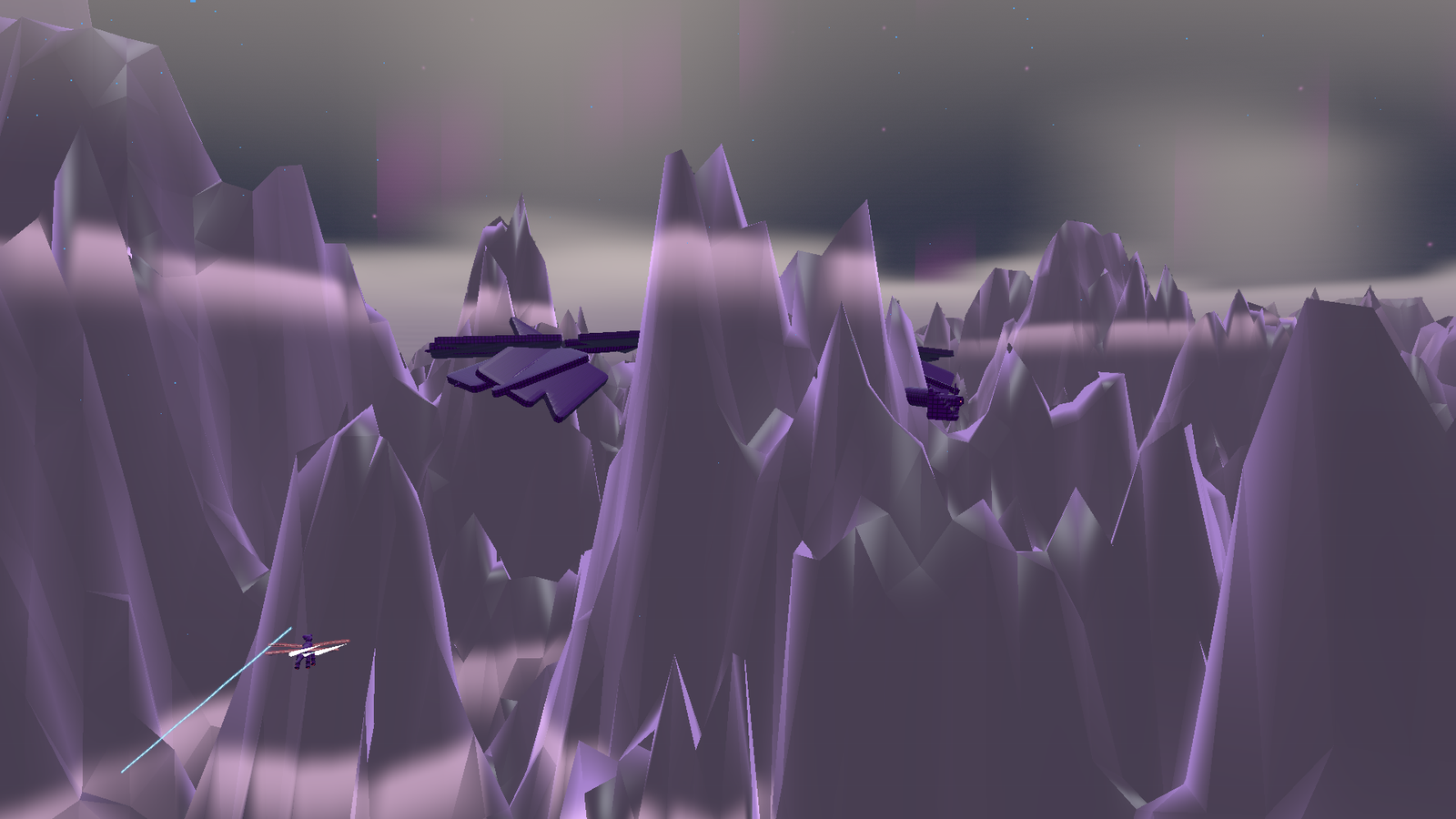
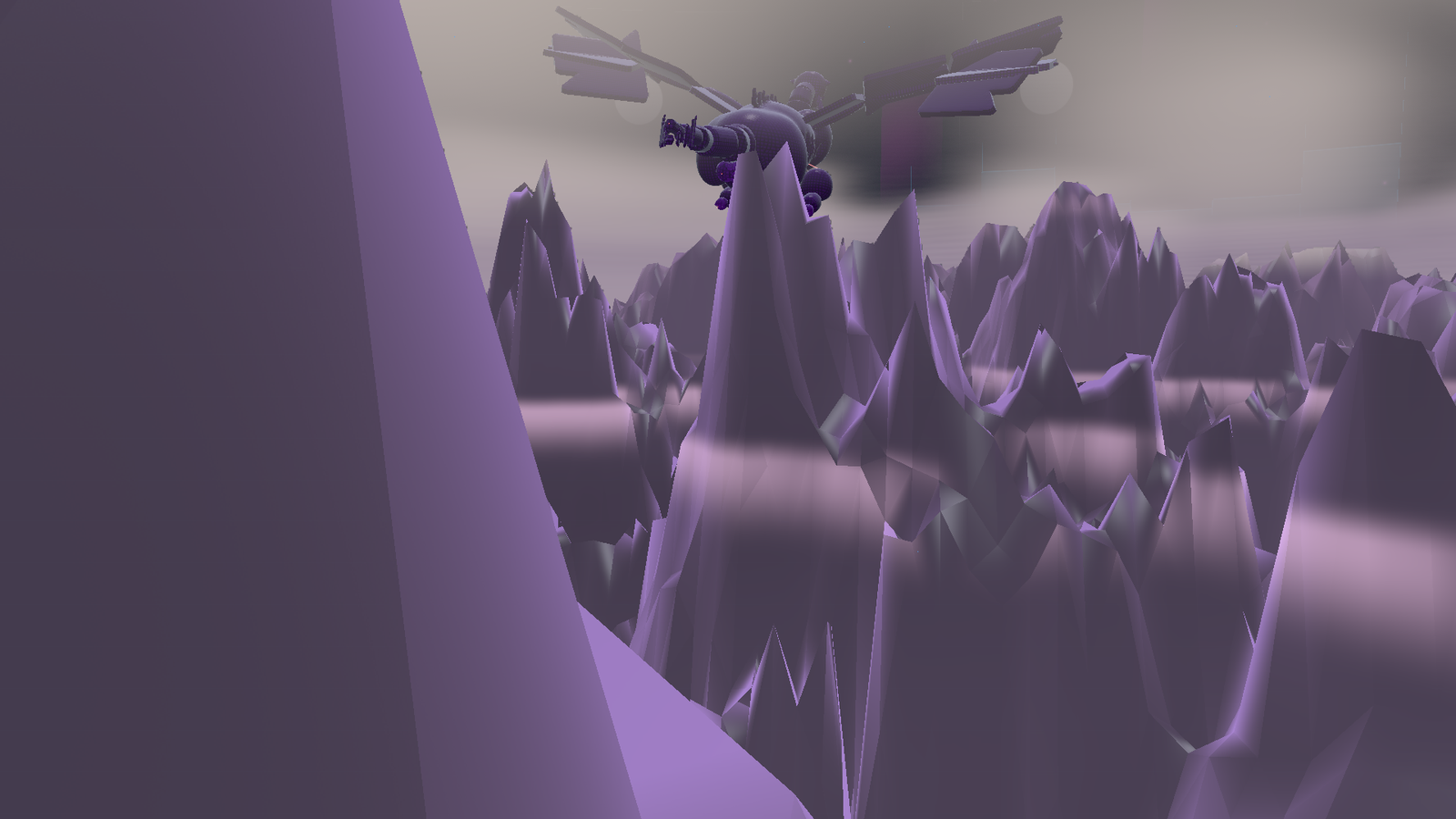
Status: scope. The captures show the creatures in flight among violet peaks and inside a cloud layer; which scene they were taken in was not recorded. They do not measure stroke timing; the change itself is in the motion code.